






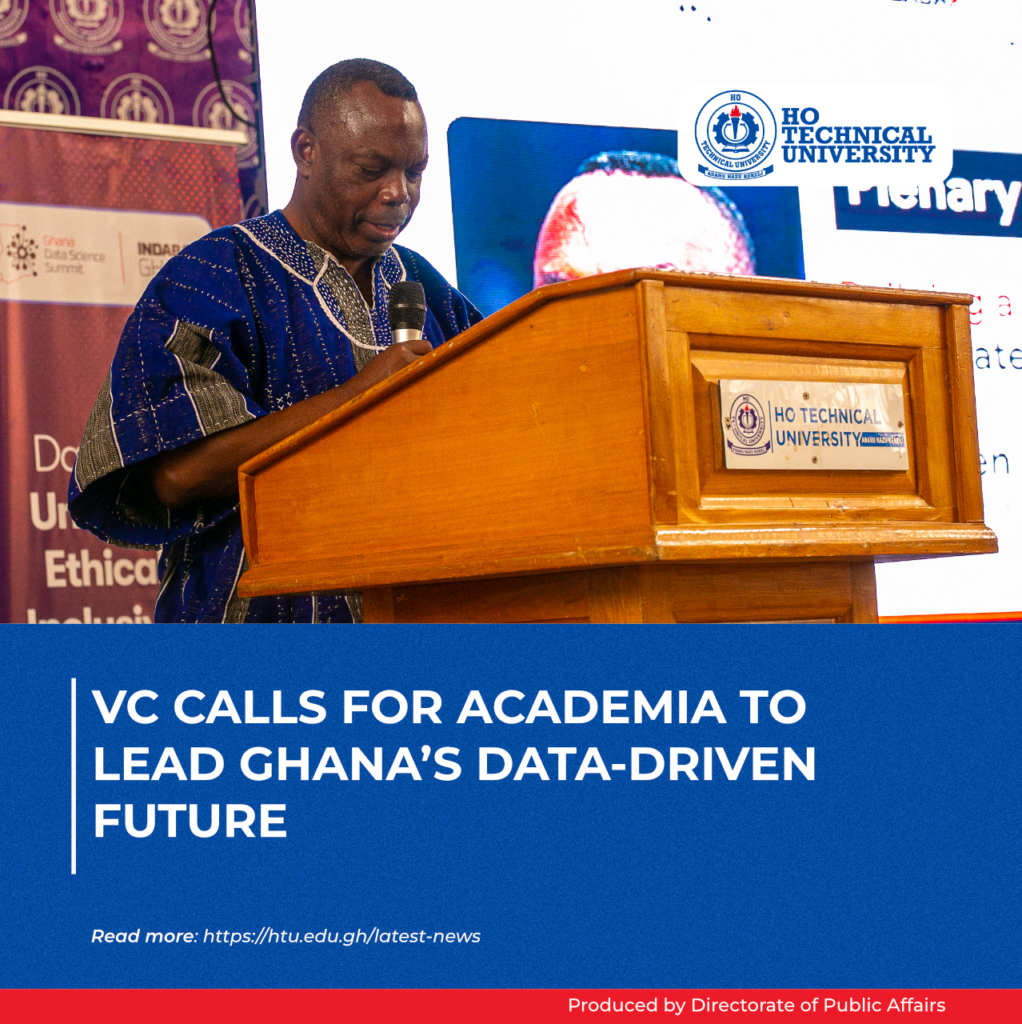
The Vice-Chancellor of Ho Technical University (HTU), Prof. Ben Q. Honyenuga, has underscored the need for Ghana to embrace data-informed decision-making and responsible artificial intelligence (AI) as key drivers of national development. He made the remarks during the opening ceremony of the Ghana Data Science Summit (GDSS) 2026, hosted by IndabaX Ghana in collaboration with HTU on Tuesday, June 24, 2026.
The three-day summit, themed “Data First: Unlocking Ethical & Inclusive AI in Ghana,” brought together academics, researchers, industry professionals, policymakers, technology practitioners, and students to explore the transformative role of data and artificial intelligence in addressing contemporary challenges and advancing sustainable development.
Addressing participants, Prof. Honyenuga described data as an indispensable resource for national development, stressing that Ghana’s competitiveness and industrial transformation will depend on its ability to harness data effectively. He urged universities to champion evidence-based research and innovation while equipping students with the skills required in emerging fields such as data science, artificial intelligence and cybersecurity to meet the demands of the digital economy.
The Vice-Chancellor further challenged academia to play a leading role in shaping Ghana’s digital future by producing knowledge that informs policy and drives innovation. He noted that HTU is strengthening its contribution through specialised academic programmes, including its MSc in Statistics and Data Science, to develop highly skilled professionals capable of addressing national and global challenges.
Prof. Honyenuga also called for stronger collaboration among academia, industry and government to ensure research translates into practical solutions for national development.He urged stakeholders to build lasting partnerships that will promote innovation, strengthen public policy, and advance Ghana’s digital transformation agenda.
Reading the keynote address on behalf of the Acting Deputy Government Statistician, Mr. Louis Toboh, the Volta Regional Statistician highlighted the importance of placing quality data at the heart of Ghana’s artificial intelligence agenda. He explained that reliable, representative, and locally relevant data is fundamental to developing effective AI systems, cautioning that technologies built without context-specific data could produce inaccurate and biased outcomes.
Speaking on behalf of GIZ Ghana, Mr. Daniel Amewuda reaffirmed Germany’s long-standing partnership with Ghana in advancing sustainable development, innovation, digital transformation, and skills development. He noted that the summit’s theme resonates with GIZ’s commitment to promoting responsible and ethical artificial intelligence, and encouraged stakeholders to harness locally generated data to develop innovative solutions to challenges in agriculture, healthcare, education, and public service delivery.
The summit concluded with breakout sessions featuring tutorials and hands-on practical workshops designed to deepen participants’ technical skills.